Although often used interchangeably, growth marketing and demand generation are distinct strategies that share some tactics and end goals. Understanding the differences between these two will help businesses implement customized solutions based on their marketing needs.
So, what are their unique features, and how do each contribute to the overall business success?
This guide will dive into all aspects of growth marketing vs. demand generation.
TL;DR – Growth Marketing vs. Demand Generation
How does growth marketing compare to demand generation?
The following table provides a quick overview of their benefits and drawbacks.
| Growth Marketing | Demand Generation |
|---|---|
| Optimizes the customer cycle to increase revenue | Focuses on increasing brand awareness through educational content |
| Pros | Pros |
| - Focuses on improving the entire business - Building a strong strategy results in sustainable growth - Identifies unique opportunities that a business can leverage - Optimizes marketing costs for better ROI | - Increases brand awareness and helps attract new leads - Improves conversion rate at each stage of the marketing funnel - Helps nurture customer relationships and produce quality leads - Utilizes low CAC organic channels and produces high ROI in the long-term |
| Cons | Cons |
| - Takes time to build a growth strategy due to lots of unknowns - Complex and expensive to execute - Uses aggressive marketing tactics, which can sometimes annoy prospects | - Complex and requires thorough planning - Ineffective without proper budget allocation - Uncertain results due to the ever-changing market dynamics |
| Best For | Best For |
| Companies looking for growth in all stages of the funnel. | Businesses targeting the top of the funnel (TOFU) stage. |
An understanding of both strategies is essential for marketing and growing a business. For over two decades, I’ve partnered with businesses for their demand-generation campaigns that create genuine interest in their offerings.
Schedule an intro call to discover how we can collaborate to create marketing strategies that drive long-term growth.

What is Growth Marketing?
Growth marketing is a long-term strategy to increase a business’s revenue by improving consumer interaction and retention.
Growth marketers use different techniques to:
- Reach new prospects and retain existing customers
- Reduce customer acquisition costs (CACs)
- Test new marketing strategies
- Track KPIs and other metrics
- Improve conversion rates
Growth Marketing Example: Dropbox, a cloud storage solution, implements one of the most successful growth marketing strategies. Through its referral program, it grew from 100K to a million users, achieving a 3900% growth in 15 months.

Growth Marketing vs. Performance Marketing
Unlike growth marketing, which is a long-term strategy, performance marketing is a results-driven approach to achieving short-term goals by tracking specific key performance indicators (KPIs) such as clicks, conversions, and sales.
Additionally, it differs from growth marketing, which focuses on the entire customer journey. Instead, performance marketing focuses on a specific customer segment to drive measurable actions that result in direct return on investment (ROI).
Performance marketing uses these techniques:
- Drive immediate conversion
- Identify and reach high-intent prospects
- Identify and scale the most profitable channels or campaigns
- Prompt prospects to take immediate action
- Minimize cost per acquisition and maximize click-through rates
- Retarget prospects who didn’t convert initially
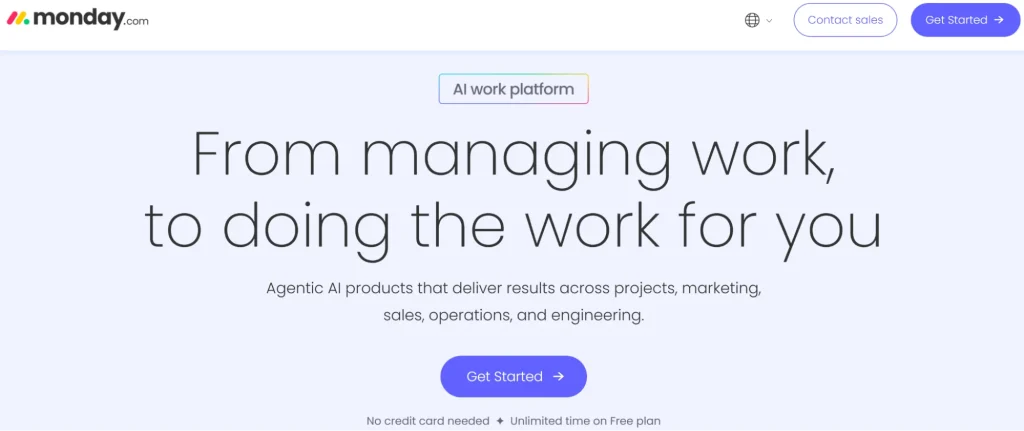
Performance Marketing Example: Monday.com, a cloud-based, visual project management platform, uses performance marketing to reach its targets. Its messaging is designed to drive high-quality leads to sign up.
What is Product Led Growth Marketing?
Product-led growth (PLG) marketing highlights the product as the company’s primary customer acquisition tool.
The PLG marketing strategy prioritizes the following:
- Easy Product Accessibility: Offering firsthand experience of the company products through free trials.
- Outstanding User Experience: Products are developed with the users in mind, resulting in an excellent value-driven user experience.
- Shorter Sales Cycles: Unlike sales-led models, the product-led strategy simplifies the complex onboarding processes and leverages customer feedback to improve products.
- Reduced Acquisition Costs: Excellent offerings and freemium models attract paying clients quickly, reducing marketing costs.
- Streamlined Onboarding: The focus is on personalization through targeted onboarding and customized user experience.
PLG Marketing Example: Slack, the communication channel, excels at utilizing PLG marketing. It provides in-app tutorials that teach users how to use the platform, offers a free plan, and has several customer feedback loops.

Growth Marketing Framework
The growth marketing framework guides businesses in experimenting with strategies, identifying the most productive tactics, and ensuring efficient execution.
Here are the 4 fundamental steps of creating one:
1. Define the Buyer Personas
Define customer profiles by analyzing demographics, geographic locations, and industry.
Segment and map out their journey to create customized messaging showcasing how the product or service will solve their needs.
2. Set Clear Goals
Setting specific goals ensures that all departments and functions use available resources to achieve the same result.
An example of a measurable goal is ‘increasing product sign-ups or landing page traffic by a particular percentage.’
3. Run A/B Tests
The next step is to conduct A/B testing to determine the most effective strategies for generating sustainable growth. Test various marketing assets, including landing pages, emails, CTAs, headlines, social media posts, and images.
Through message testing, marketers can see which variant performs strongly.
4. Measure and Refine
Collect relevant insights and KPIs, such as engagement and conversions, from the test to make necessary adjustments. Collaborate with all teams to refine marketing and improve products.
Ready to refine your growth marketing strategy?
Partner with me to pinpoint opportunities and implement the right growth marketing tactics. We will leverage diverse channels and strategies to drive the most impact. We’ll then define core KPIs to measure success and internalize the numbers to make informed decisions.
Join me on a call to build a winning framework that drives long-term growth.
Advanced Growth Marketing Strategies
Effective advanced growth marketing strategies are data-driven approaches that blend experimentation, automation, and personalization to maximize customer lifetime value while minimizing acquisition cost.
Here are some of them:
Building Viral Growth Loops that Compound
A viral growth loop is a strategy where one action leads to another, creating a self-sustaining cycle. For instance, product or service users invite or refer others, expanding a business’s customer base. Or published content generates traffic, leading to more visibility.
Leverage Network Effects
Network effects rely on numbers to increase a product’s or service’s value. Simply put, the value increases as more people use it, accelerating adoption, reducing acquisition costs, and increasing retention. Essentially, users act as salespeople by spreading positive word-of-mouth about the product or service, generating new leads.
Cohort Retention Analysis
This strategy tracks customer trends and patterns to help make decisions that improve the retention curve. It looks deeper into aggregate metrics to reveal how a product change or new campaigns affect long-term outcomes.
Partnership Integrations
This is a strategic approach where a business forms a co-marketing partnership by integrating its products or services. This is a growth-based decision that has proven to influence a company’s market reach and overall profitability.
Hyper-Personalization
Leverage AI and real-time data to deliver highly tailored B2B customer experience, products, or services based on the preferences and behaviour of the individual customers. This strategy not only fosters stronger customer retention and loyalty but also values that resonate with each customer
How to Choose the Right Growth Marketing Specialist
Brands need to hire a brand marketing consultant who can bridge awareness with conversion, leading to increased revenue and market share.
Here’s how to identify a top growth marketing specialist:
- Look for Expertise: Not all growth marketing strategists have the skills to cover the entire funnel, from acquisition through sustainability. Businesses that can find one with the specialized skills for all stages are better set for success.
- Evaluate Experience: The right growth specialist must have a proven track record in growth marketing and demonstrate experience in working with similar businesses.
- Assess Approach: How do they design, execute, implement, and measure growth initiatives? Are they able to adapt to changing consumer behavior or market needs? The right growth marketing specialist aligns with clients’ expectations and business needs.
- Evaluate Former Reports: The right specialists are transparent. They should provide clear, actionable reports, positioning them as accountable partners.
- Consider Cultural Fit: Growth marketing demands cross-functional collaboration. Choose an expert who can work with key team members.
- Review Business Performance: Whether pricing is performance-based, project-based, or retainer-based, assess whether their insights and strategies drive sustainable brand growth.
- Schedule a Consultation: If a growth marketing expert meets all these criteria, schedule a consultation to assess their capabilities.
Want a strategic partner that can transform your business from stagnant to scaling?
Partner with me to help you create messaging that connects deeply with your audience and implement data-driven strategies that accelerate sustainable business growth.
Schedule a discovery call, and let’s work together to create results-driven, customized strategies.

What is Demand Generation?
Demand generation is a strategy that uses continuous, education-focused content to develop awareness and attract potential customers. The content highlights the prospects’ common pain points and positions the offering as the ultimate solution.
Unlike lead generation, which focuses on capturing qualified leads, demand generation primarily focuses on creating genuine interest (generating demand).
Common goals of demand gen marketing are:
- Establishing the brand credibility
- Improving search engine ranking
- Increasing exceptional inbound inquiries
Demand Gen Campaign Example: Canva, a graphic design tool, has continuously created brand awareness campaigns by offering free trials to allow users to experience their product and realize its benefits.

Demand Generation vs. Lead Generation
Unlike demand generation, which drives awareness and interest in a product or service, lead generation focuses on capturing qualified leads. These leads are from prospects who have expressed interest in an offer and are being nurtured toward becoming paying customers.
The goal of lead generation is to:
- Build and focus on qualified leads
- Reduce the cost per lead (CPL)
- Improve conversion rate
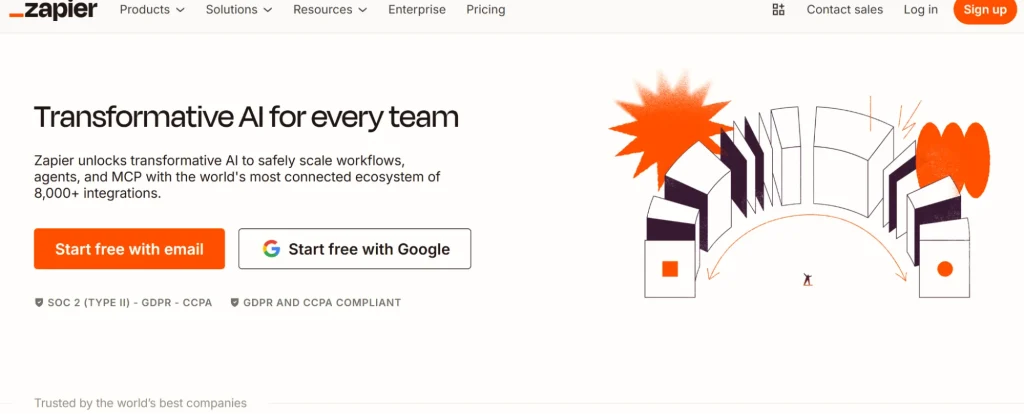
Lead Generation Example: Zapier, an automation platform, offers a free tier of its products that requires users to sign up with an email address. The brand then nurtures the leads to upgrade to a paid plan through onboarding emails or tutorials.
Most Effective Demand Generation Strategy
Businesses often debate on the most effective demand gen strategy.
Check out the 5 best strategies:
1. Freebies
Unlike lead generation, which heavily utilizes gated content, demand-generation tactics focus on capturing the audience’s attention and generating excitement for an offering with freebies, such as free trials and strategy sessions.
2. Educational Email Content
Email marketing is another low-cost, high-ROI demand-generation tactic. Businesses can implement email series or courses that showcase how the offerings solve the audience’s pain points.
They can also segment the email list to make the messages relevant to each recipient.
3. Social Media Marketing
While it’s competitive, social media marketing is a great tactic to increase brand awareness.
Businesses can mix organic social media posts with ads to build a consistent, cohesive presence across multiple channels and reach a large customer base.
4. Industry Collaboration
Guest blogging, influencer marketing, sponsorships, YouTube guest appearances, and podcast interview marketing can generate massive brand exposure and increase brand authority.
Demand Generation Best Practices
Here are the top 4 best practices to enhance demand generation efforts:
- Know the Buyer Persona: Conduct in-depth audience research to define the ideal customer profile (ICP). Understand their demographics, pain points, preferences, purchasing behavior, and goals. These insights lay the foundation of the entire strategy and facilitate the creation of targeted content across multiple channels.
- Develop a Content Strategy: Create a consistent messaging framework to guide the content across all marketing channels. Remember to segment the audience, test various content, make the content valuable, and repurpose performing content to maximize the reach.
- Use Automation Solutions: Use tools like Zapier and HubSpot to streamline, manage, and support marketing tasks across multiple channels, such as creating targeted campaigns, scoring leads, getting data reports, or performing A/B tests.
- Analyze the Campaigns: Evaluate and audit each campaign by tracking metrics like marketing qualified leads (MQL), sales qualified leads (SQL), cost per acquisition (CAC), sign-ups and activations, and customer lifetime value (CLTV). Remember to optimize ongoing campaigns with these data-driven insights.
Demand Generation Metrics to Track
SaaS companies must analyze the success of their demand generation strategies and spot areas for improvement.
Check out the common metrics to monitor:
- Marketing Qualified Leads (MQL): A prospect who interacts with the company’s marketing content and demonstrates a high level of interest in a specific product or service.
- Customer Lifetime Value (CLV): The total profit a business expects from a customer over the course of their relationship.
- Return on Investment (ROI): It is a financial metric that measures the effectiveness of a specific marketing initiative or campaign .
- Sales Qualified Leads (SQLs): Refers to a prospect who has been qualified as a potential buyer
- Monthly Recurrent Revenue (MRR): Represents the predictable income a business generates monthly for active subscriptions.
- Annual Recurring Revenue (ARR): Provides a long-term view of a SaaS business’s revenue trend and supports strategic planning.
- Average Revenue Per User (ARPU): Measures the revenue each customer contributes on average.
- Churn Rate: Tracks the customers a business loses over a specific period.
- Cost Per Acquisition (CPA): The cost per customer acquired. It is calculated by dividing the total cost of the campaign by the total number of conversions generated (in that campaign).
- CAC Payback Period: Shows how long it would take to recoup the cost of acquiring a customer.
- Lead Velocity Rate (LVR): Measures the monthly growth of qualified leads and helps predict future revenue potential.
- Marketing Sourced Pipeline: It is the total amount of sales generated from a specific campaign.
- Close Rate Per Channel: Measures the percentage of leads from a specific channel that convert into paying customers – meant to gauge the effectiveness of marketing or sales channels.
- Net Promoter Score (NPS): Measures existing customers’ likelihood to recommend a product or service. It categorizes them based on earned scores, with the most loyal (promoters) receiving the highest score.
- Conversion Rate: Reveals how effective a demand generation funnel is in transforming leads into paying customers.
- Contribution to Total Revenue: Shows the portion of a company’s overall revenue generated from a specific product line, customer segment, or channel.
- Average Deal Size: Reflects the total amount generated from a customer’s transaction.
- Signups and Activations: Tracks the total number of users who’ve created an account to access a product or service for free or have activated their free trials.

Demand Generation vs. Growth Marketing: Core Differences
Here’s a side-by-side features comparison of growth marketing and demand generation:
| Aspect | Demand Generation | Growth Marketing |
|---|---|---|
| Primary Goal | Raise awareness and buyer interest by positioning a brand as a trusted authority and nurturing valuable connections | Increase business revenue by optimizing the entire customer lifecycle. |
| Funnel Ownership | Top and middle funnel, from awareness to lead qualification. | Full funnel, from acquisition to referral. |
| Core Focus | Building brand visibility and trust, leading to a steady pipeline of potential customers. | Improving conversion rate, customer retention, and revenue, leading to long-term scalable success. |
| Time Horizon | Takes longer to build relationships. | Runs on continuous short-term testing. |
| Key Metrics | - Brand sentiment - Click-through rate - Website traffic - Lead conversion rate - CPL, MQLs, SQLs, and CPA - Activations and sign-ups - Contribution to total revenue - Average deal size | - CLV, CAC, and retention rate - Conversion rate and revenue growth - Referral metrics and churn rate |
| Typical Channels | - Thought leadership and SEO - Webinars - Podcasts - Paid advertising (pay-per-click ads) | - Pay-per-click (PPC) advertising - SEO and email marketing - Referral programs - Community engagement |
| Best Fit For | Businesses aiming at generating qualified leads. | Brands seeking to improve customer acquisition and retention to build scalable revenue. |
Similarities and Differences
Understanding the differences and similarities between demand generation and growth marketing is essential because they require different tactics.
Growth Marketing vs. Demand Generation Differences
These are the 5 clear distinctions between the two strategies:
- Focus: Growth marketing focuses on the whole funnel, while demand generation focuses more on the top stage of the funnel.
- Approach: While growth marketing aims to maximize the user experience, demand generation seeks to attract new customers mainly through educational content.
- Timeframe: Growth marketing strategies mainly rely on short-term tests and swift iterations, while demand generation takes longer to nurture relationships and leads.
- Key Metrics: Growth marketing mainly analyzes growth rate, while demand generation focuses on lead quality.
- Team Structure: While demand generation experts mainly focus on marketing, growth marketers typically collaborate in multiple roles, including product development and marketing.
Growth Marketing and Demand Generation Similarities
Check out the areas where the interests in these two areas overlap and where they work together:
- Customer-centric: Both approaches focus on understanding the customer needs and delivering value through different marketing efforts.
- Automation: Both heavily depend on marketing tools for audience research and targeting.
- Data-driven: Like growth marketing, demand generation utilizes data analytics to assess, scale, and optimize campaigns.
- Cross-functional: Both strategies encourage collaboration between departments, such as marketing.

When to Choose Growth Marketing
Growth marketing is ideal for businesses that have optimized their entire customer journey and aim to expand their market reach and revenue.
This strategy is ideal in these scenarios:
- Competitive market: When marketing efforts, such as advertising, are less effective, growth marketing can help drive customer retention and increase customer lifetime value.
- Stronger Collaboration: There is a strong relationship between the key teams within the company, that is, the marketing team, customer success team, and product team, with the intent to improve customer experience and build scalable revenue systems.
- Product Market Fit: Looking to refine the ideal customer profile and value proposition through cost-effective experimentation.
- Product-led Growth: Has launched a product or service that can harness the benefits of product-led-growth and wants to grow efficiently while keeping acquisition costs low.
- High Number of Customers: Records a high volume of customers interested in a product or service, but the acquisition rate is low.
- Long-term Growth: The business is ready to implement the necessary systems to streamline the customer journey and maximize growth loops.
When to Choose Demand Generation
Demand generation creates awareness, sparks interest in a brand’s products, and builds long-term trust.
Here are scenarios it is highly recommended for any business:
- Innovative Solutions: Helps potential customers understand their pain points and the significant value of the innovative approach.
- Entering a new market: Introduces the company to a new audience, educates them about the solution being offered, and explains how it’ll benefit them.
- Long and Complex Sales Cycle: The buyer must conduct extensive research and build trust with the brand before making a decision.
- Competitive Industries: Helps build credibility, especially for competitive industries where trust is paramount in closing sales.
Can You Run Both Together?
The short answer is yes!
Businesses that run both build a sustainable growth system and optimize the entire customer journey.
Demand generation helps a business build highly qualified leads by focusing on meaningful interactions with target prospects. Growth marketing aims to convert these leads into active buyers, loyal customers, and advocates.
What About Growth Hacking?
Growth hacking is an experimental mix of creative strategies that brands use to achieve rapid growth within a short period with minimal costs. It combines aspects of data analytics, marketing, and product development.
There are three main aspects of growth hacking:
- Content Marketing: Guest posts, hosting webinars, podcasting, and posting on appropriate forums are vital for a growth hacking strategy.
- Advertising Strategies: Implement PPC marketing and social media ads to expand the brand’s online presence quickly.
- Product Marketing: Leverage FOMO, limited sign-ups, referral programs, gamified onboarding, and affiliate marketing.

Bottom Line
Integrating demand generation and growth marketing strategies enhances conversion rates and customer retention.
Need help to implement a growth marketing strategy?
As a business growth consultant, I can help you create winning strategies that spark genuine interest and craft compelling messaging that drives meaningful connections. Through our collaboration, we will also capture high-quality leads, shorten the sales cycle, and formulate tactics that align with your business goals.
Book a discovery call to build an actionable strategy that steers your company toward sustainable growth.
Frequently Asked Questions (FAQs)
Below, we’ve answered frequently asked questions about growth marketing vs. demand generation:
Can Demand Generation Exist without Growth Marketing?
No.
The two concepts aren’t mutually exclusive. Other than sharing some techniques, demand generation is a subset of the broader growth marketing strategy.
What is B2B Growth Marketing?
B2B growth marketing uses data collected from marketing campaigns to drive sustainable, long-term growth and build strong relationships between businesses.
What is a Demand Generation Funnel?
A demand generation funnel visually depicts the customer journey from initial contact to conversion. The stages include awareness, interest, consideration, intent, purchase, and post-purchase experience.
Is Growth Marketing More Expensive Than Demand Generation?
The initial cost of demand generation is often high and tends to decline as the brand’s market value increases. Similarly, the upfront investment required to set up growth marketing infrastructure is high but reduces overall costs over the long term.
How Long Does It Take to See Results From Demand Generation?
The timeline varies depending on the audience engagement with a brand, the level of competition, and consistent messaging. Most companies see measurable results that are beyond an increase in engagement and traffic within the first 3 to 6 months.
Can One Person Handle Both Growth Marketing and Demand Generation?
Yes, one person can initiate both growth marketing and demand generation, but scaling them requires hiring demand generation and conversion services.