Over the last few years, reducing customer acquisition costs (CAC) has become a top priority for businesses looking to protect their profit margins. Unfortunately, many teams struggle to hit their target profits because they don’t know how to reduce costs.
While there’s no one-size-fits-all approach to cutting acquisition expenses, the most effective marketing strategies are based on strong messaging and continuous CAC optimization.
This guide explores how to reduce customer acquisition costs across all channels, how CAC is calculated, and the factors that influence CAC.
Customer Acquisition Cost and Why It Matters
Customer Acquisition Cost is the total investment, including marketing spend, sales overhead, and the unbilled hours spent networking or pitching, required to win a single new client.
Tracking and optimizing costs per acquisition matters because the metric:
- Gives Insights into Profitability: Understanding CAC allows businesses to estimate the profitability of each customer acquisition method.
- Influences Pricing and Budget: Enables companies to evaluate the effectiveness of their marketing strategy and allocate resources effectively.
- Uncovers Ineffective Channels: Tracking CAC by platform reveals when a channel is losing effectiveness, enabling businesses to adjust accordingly.
- Exposes Messaging and Offer Flaws: CAC enables companies to evaluate and optimize their market positioning and brand messaging.
- Indicates Business Scalability: Investors closely examine CAC to assess whether a business can grow efficiently. A stable or declining CAC with adequate growth indicates a strong and highly scalable business model.

Key Factors That Drive High Customer Acquisition Cost
Brands must first identify the specific bottlenecks driving costs up to fix a broken customer acquisition strategy.
For most businesses, an inflated acquisition cost is almost always driven by the factors below:
Competition
As digital spaces become increasingly crowded, the cost of capturing a prospect’s attention rises. In high-ticket spaces, competition drives up advertising and content production costs.
Without a distinct angle, businesses end up spending significantly more resources just to be heard above the noise.
Improper Targeting
A broad audience is an expensive audience. When marketing efforts target generic industries rather than highly specific decision-makers, such as targeting all small businesses rather than venture-backed software founders, the pipeline fills with people who are not ready to buy.
As a result, the business wastes money and dozens of unpaid hours filtering out bad prospects.
Low Conversion Rates
A broken sales funnel acts as a multiplier on acquisition costs. When a website or sales process fails to convert interested prospects due to a confusing booking system, unclear next steps, or weak follow-up, the initial marketing investment is wasted.
This inefficiency requires the business to generate far more raw traffic just to secure a single customer.
Poor Brand Awareness and Positioning
When a brand’s positioning is vague or generic, prospects struggle to understand the unique value on offer.
Without clear authority or helpful content to educate buyers up front, brands end up going through long, exhausting sales cycles before prospects make a purchase.
Overcoming this friction requires brands to master the nuances of positioning vs messaging.
Product-Market Mismatch
Another factor that raises customer acquisition costs is an offer that buyers neither want nor understand.
For example, if a consultant creates a service based on what they think the client needs, rather than the immediate, painful problem the client is trying to solve, convincing people to buy becomes nearly impossible.
CAC Calculation Formula
The CAC formula divides the total cost of acquiring new clients (cost of sales and marketing) by the total number of clients acquired over a period of time.
Here’s how to calculate customer acquisition costs:

Note: The sales investment includes sales commissions and all the unbilled hours spent in marketing.
A high-ticket consulting example:
Imagine a fractional executive who wants to calculate their acquisition costs over 3 months. During this quarter, they invested the following resources into their client acquisition process:
- Paid Advertising: $3,000 spent on highly targeted LinkedIn ads.
- Software and Tools: $600 for a scheduling tool, email software, and a CRM.
- Unbilled Sales and Marketing Time: The consultant spends 40 hours per month writing case studies, networking, and answering discovery calls. At their standard billable rate of $50 per hour, this time investment is worth $6,000 (120 hours X $50).
During these 3 months, the client successfully acquired 32 new clients.
The total marketing spend amounts to $6,000 + $600 + $3,000= $9,600
Using the formula, the calculation looks like this:
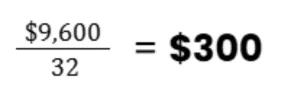
In this case, the consultant pays $300 to acquire one new client.

How to Reduce Customer Acquisition Cost
Optimizing tactics in a broken customer acquisition funnel cannot succeed unless the identified root causes are addressed.
To reduce costs and increase profitability, founders should:
1. Build a Referral System
Referrals are the most effective way to get new clients because trust transfers directly from the source to the prospect, and the acquisition cost is lower than the cost of standard paid advertising.
While most service businesses wait for referrals to happen by chance, lowering acquisition costs requires an automated system that requests and rewards referrals predictably.
2. Invest in Organic Channels that Compound Over Time
To permanently reduce CAC, businesses must invest in an organic demand generation funnel built on SEO, helpful content, and thought leadership.
As a company’s content library grows, it attracts more steady traffic, lowering the cost per acquisition. The catch is that meaningful traffic takes 6 to 12 months to develop, since content is a long-term customer-acquisition strategy.
3. Optimize the Conversion Path
Instead of focusing solely on lowering ad costs when CAC gets high, brands should evaluate their conversion path. They should create an omnichannel customer experience that delivers a cohesive journey, driving more conversions and lower CAC.
For brands, the high-impact areas to optimize are the lead magnet, the sales call booking rate, and the client close rate.
4. Lower Long-Term Acquisition Burden
Having a retention-focused mindset within the overall customer acquisition and retention strategy is often an overlooked way to reduce CAC. This is because keeping a client longer is the fastest way to increase the customer lifetime value (CLV), boosting the overall LTV: CAC ratio.
In fact, brands that reduce churn by 5% boost profits by 25% to 85%.
5. Reactivate Existing Contacts
Reactivating contact with former subscribers and prospects who got stuck in the sales funnel costs a fraction of what cold acquisition does, since the trust-building work has already been done.
To have a successful reactivation process, companies should first segment the list by recency and past relationship type. After organizing the list, they should craft tailored messages to each segment based on their current pain points.
Finally, the company should offer a low-friction entry point to encourage more subscriptions without incurring a high CAC.
6. Improve Lead Quality
A major hidden driver of an inflated customer acquisition cost is poor lead quality. Every hour spent on a sales call with an unqualified prospect represents a marketing cost with zero return.
Businesses should ensure they target high-value prospects through strategic messaging and introduce strict qualification criteria at the lead-capture stage.
If you want to optimize your funnel, you should consider partnering with a customer acquisition consultant.
Together, we can tie every targeted campaign to your top channels to lower CAC and churn rates. We can refine your messaging to ensure it addresses your audience at each stage of the customer journey.
We will also craft personalized messaging that resonates and nudges the prospects to convert.
Connect with me and let’s discuss how to streamline your funnel and drive sustainable growth.

Metrics That Help Track Customer Acquisition Cost Efficiency
To keep a business highly profitable, owners must monitor specific data to understand how efficiently their marketing efforts generate revenue.
Some of the key metrics brands should track include:
Frequently Asked Questions (FAQs)
Here are answers to the most common questions about reducing customer acquisition cost across all businesses:
What Is a Good Customer Acquisition Cost?
A good customer acquisition cost depends entirely on the value of a customer to a business.
Instead, brands should focus on optimizing their LTV: CAC ratio. A ratio of 3:1 or higher is considered healthy across most business models, meaning the business makes 3 times what it spent to acquire the client.
What Is the Difference Between CAC and CPA?
CAC tracks the total investment required to win a single paying client, whereas CPA measures the cost of a specific conversion action, which may or may not result in revenue.
For service businesses, actions such as downloading a whitepaper, registering for a webinar, or scheduling a discovery session are CPA events. The CAC event, however, occurs when that qualified lead signs a contract and pays an invoice, making it the ultimate measure of what it costs to secure a paying client.
Does Increasing Ad Spend Lower CAC?
Rarely. Scaling ad spend only lowers CAC when a channel is not yet saturated, and the additional spend converts more audiences at a similar or better rate.
The more reliable path to reduce customer acquisition costs is to improve the conversion rate of the current ad spend by focusing on the sales funnel.
How Often Should Customer Acquisition Cost Be Measured?
CACs should be measured monthly, and trends analyzed quarterly to account for longer sales cycles.
Reviewing this data over a longer timeline prevents reactive adjustments driven by weekly traffic spikes, ensuring marketing decisions are guided by true customer lifetime value rather than temporary spikes.
Conclusion
Marketing efficiency for most brands is determined by a clearly defined offer, precise audience targeting, a friction-free conversion path, and a commitment to compounding marketing channels.
For brands looking to design a highly efficient growth engine with strategic, hands-on support, partnering with a fractional growth specialist can help you achieve results faster.
Together, we can turn your marketing pipeline into a predictable, highly profitable acquisition system. We can build a conversion strategy tailored to your brand.
Book a 20-minute discovery call to streamline and optimize the journey towards conversions.